
Beauty Tech Revolution: How AR and AI Are Transforming Indian Beauty Shopping
Introduction:
The Indian beauty market stands at an extraordinary inflection point where sophisticated digital technology meets millions of consumers discovering online beauty shopping for the first time. While Western beauty consumers have accessed augmented reality (AR) makeup try-ons and artificial intelligence (AI) product recommendations for several years, these technologies are only now becoming mainstream within India—arriving at precisely the moment when India's beauty market experiences explosive growth, when smartphone penetration reaches unprecedented levels, and when consumers increasingly comfortable with digital shopping seek tools addressing the traditional online beauty shopping challenge: uncertainty about product appearance and suitability without physical testing.
Beauty technology—AR virtual try-ons, AI color-matching algorithms, personalized recommendation engines, and virtual beauty consultants—directly addresses this friction point, enabling Indian consumers to confidently purchase beauty products online despite geographical constraints preventing physical testing. This technological revolution extends far beyond convenience; it represents democratization of beauty expertise previously available exclusively through professional consultations. This comprehensive guide explores the revolution of beauty tech in India, examining how AR and AI technologies are transforming beauty shopping, the competitive landscape of Indian beauty tech innovation, the profound implications for how Indians approach cosmetics and skincare, and why this technological shift represents far more than a novelty feature—it's fundamentally restructuring the Indian beauty market.
The Technology Behind Virtual Try-Ons: Understanding AR and AI in Beauty: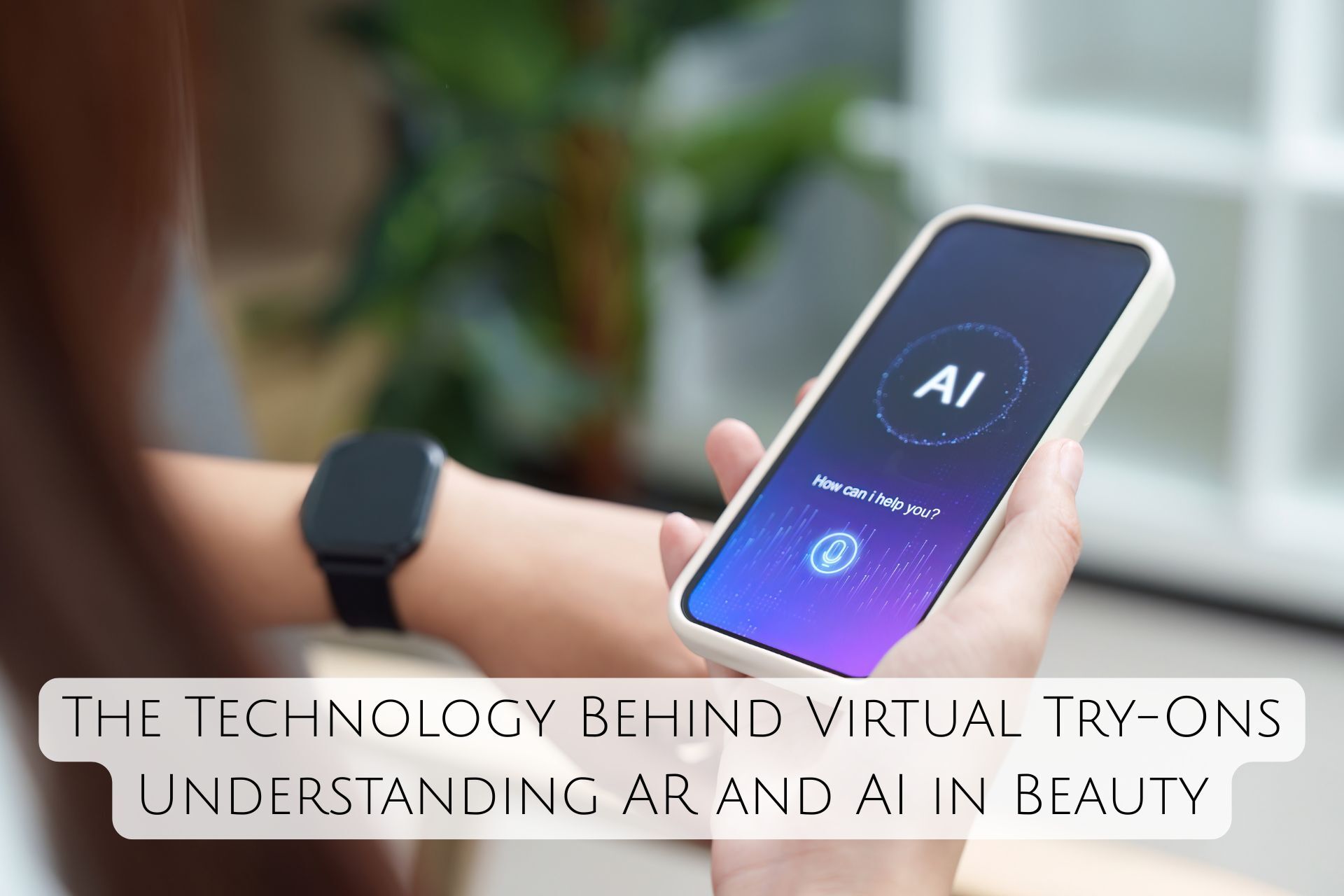
To appreciate how virtual try-on technology transforms shopping, understanding the sophisticated technologies powering these experiences proves essential. Augmented Reality (AR) forms the visible foundation, enabling digital elements to overlay onto real-world images in real time. When you open a virtual try-on app and point your smartphone at your face, the camera captures your image and advanced software analyzes it, identifying facial landmarks—your eye positions, lip shape, cheekbone structure, skin tone—with extraordinary precision. The AR system then overlays virtual makeup representations onto your detected features, creating the appearance that you've physically applied specific lipstick shades, eyeshadows, or foundations. This isn't simple filtering; sophisticated rendering algorithms account for how light reflects off makeup surfaces, how colors interact with your specific skin tone, how shadows form under your cheekbones, and how products move with your facial expressions and movements.
Artificial Intelligence (AI) operates invisibly behind the scenes, making virtual try-ons genuinely useful. AI systems are trained on enormous datasets containing thousands of face images across diverse ages, ethnicities, skin tones, and facial structures. This training enables AI to understand the nuanced relationships between facial features and how makeup appears on different face shapes, skin colors, and proportions. When you use an AR try-on feature, AI algorithms don't simply apply uniform filters; they intelligently adapt products to your specific facial geometry. A lipstick shade that looks stunning on pale skin might appear completely different on deep skin tones due to undertones and color absorption differences. AI accounts for these variations, automatically adjusting virtual representations to show how the actual product will appear on your unique complexion.
Artificial Intelligence in Beauty: Personalization at Scale:
While AR visualizes how specific products appear, artificial intelligence algorithms determine which products suit individual consumers through analyzing vast datasets correlating personal characteristics (skin tone, skin type, undertone, age, concerns, style preferences) with product performance and satisfaction. AI beauty technology transforms shopping from passive browsing into active personalization, delivering recommendations with sophistication matching professional beauty consultant expertise while scaling to serve millions simultaneously.
AI Color-Matching Algorithms:
- Users upload photos or use smartphone cameras for instant analysis of skin tone, undertone, lighting, and facial features.
- Machine learning trained on massive product databases and user data identifies optimal foundation shades, lipsticks, blushes, and coordinating eyeshadows.
- Accounts for lighting variations, color harmony, and undertone flattery—critical for India's diverse skin tones and lighting conditions.
- Provides precise shade matches avoiding common "too light/too dark" foundation mismatches.
AI Beauty Recommendation Engines:
- Function similarly to music or movie recommendation algorithms, learning individual preferences through interaction history and providing increasingly refined suggestions.
- Systems track which products users browse, which they purchase, which they review positively or negatively, and which they ignore; machine learning identifies patterns in preference, recommending new products with high probability of satisfaction.
- These engines account for diverse preference factors: product efficacy, texture preferences, brand loyalty, price sensitivity, ingredient concerns, and aesthetic appeal.
AI Skincare Analysis and Routine Optimization:
- Provides more sophisticated capability than product matching—analyzing skin condition and recommending optimal routines addressing specific concerns.
- Advanced systems account for ingredient interactions, preventing recommendations combining incompatible products; they consider skin barrier health and sensitivity, recommending approaches respecting individual tolerance; and they understand seasonal variation, recommending routine adjustments for different seasons.
- For Indian consumers with diverse skin types, significant environmental stressors, and limited access to dermatological consultation, AI skincare analysis provides accessible expertise supporting informed routine development.
The Indian Consumer Context: Why Beauty Tech Proves Particularly Valuable:
India's unique circumstances make beauty technology adoption particularly impactful compared to developed markets where in-store testing remains accessible to most consumers.
Geographic Accessibility Challenges prove particularly acute in India. Urban beauty consumers access diverse retailers, yet vast portions of India's population lack convenient retail access to quality international brands. For consumers in smaller cities or rural areas, online shopping represents the only feasible option for accessing diverse products; beauty tech enables informed selection despite geographical constraints. Additionally, even urban consumers frequently discover specific products available only through online retailers; AR and AI technology enable confident purchasing despite inability to physically test products locally.
Skin Tone Diversity and Color-Matching Complexity creates unique challenges addressed specifically through AI color-matching. India's extraordinary diversity in skin tones, undertones, and complexion characteristics means generic shade recommendations frequently prove inadequate; what works for one user's complexion may clash with another's despite both being classified "medium tone." AI algorithms accounting for individual undertone analysis deliver dramatically more accurate recommendations than product shade numbering (which often fails accounting for undertone variation) or generic sales associate recommendations assuming standardized color preferences.
Economic Considerations and Budget Consciousness mean Indian consumers particularly value accurate product selection supporting purchase confidence and minimizing costly mistakes. Many Indian beauty consumers operate within moderate budgets where incorrect purchases represent meaningful financial impact; beauty technology enabling informed decisions reduces regrettable purchases, optimizing limited beauty expenditure toward products genuinely serving individual needs.
Smartphone Accessibility and Digital Comfort provide essential infrastructure for beauty tech adoption. India leads globally in smartphone adoption among lower-income populations; even consumers with limited desktop access possess smartphones with sophisticated cameras and internet connectivity. Beauty tech applications designed for smartphone interfaces prove highly accessible to diverse Indian consumers; many Indians comfortable with digital payment and online shopping readily adopt beauty tech once integrated into familiar shopping platforms.
Challenges and Barriers to Beauty Tech Adoption in India:
- AR and AI features require consistent, fast internet; unreliable or slow connections make these tools inaccessible.
- AR visualizations consume significant bandwidth; consumers with limited data plans avoid these features due to cost concerns.
- Currently limits adoption in rural areas and among price-conscious urban consumers.
- Barriers will diminish as infrastructure improves and data costs decline.
- AR try-on accuracy depends on smartphone camera quality, color accuracy, and processing power.
- Older or budget smartphones with lower-resolution cameras produce degraded try-on experiences.
- Large penetration of entry-level devices in India means many consumers encounter suboptimal AR performance.
- Improves gradually as smartphone technology advances.
- Many Indian beauty consumers are skeptical about digital color matching and AI recommendations; prefer physical testing or in-person sales guidance.
- Unfamiliarity with technology creates hesitation around replacing traditional shopping methods.
- Overcoming requires education, positive testimonials, and integration with trusted brands building credibility.
- Facial analysis and personal beauty data collection raises privacy awareness, especially post-data breaches.
- Indian consumers are increasingly cautious about sharing facial images or preferences with unproven platforms.
- Beauty tech companies must demonstrate: clear privacy policies, transparent data usage, strong security, and compliance with Indian data protection regulations (DPDP Act).
Kiwla's Beauty Tech Integration: Curating Global Beauty Tech for Indian Consumers:
In the rapidly evolving landscape of beauty tech advancement, Kiwla emerges as a crucial intermediary connecting Indian consumers with premium global beauty technology and products specifically supporting the AR/AI virtual try-on revolution. Kiwla recognizes that while Indian platforms innovate locally, global beauty tech leaders continue developing cutting-edge AR tools, AI-powered skin analysis platforms, and innovative beauty devices unavailable through standard Indian retail channels. Kiwla specializes in carefully curating premium beauty technology products—advanced LED light therapy devices integrating AI analysis, premium smart mirrors enabling professional-quality virtual try-ons, innovative skincare devices equipped with AI diagnostics, and complementary beauty products from brands pioneering AR integration globally. Rather than overwhelming customers with thousands of mediocre tech products, Kiwla's expert team evaluates, tests, and features only genuinely innovative products that integrate seamlessly with India's emerging beauty tech ecosystem.
What differentiates Kiwla is their recognition that beauty tech adoption benefits immensely from access to premium, globally-developed products alongside locally-innovative Indian platforms. Their curated selection features innovative AR-enabled beauty devices, AI-powered skincare analysis tools, smart beauty mirrors, and complementary products enabling the most advanced beauty tech experiences. Whether you're seeking premium LED light therapy devices with AI skin adaptation, innovative facial mapping devices enhancing makeup application accuracy, or high-tech skincare tools providing AI recommendations, Kiwla provides direct access at transparent pricing. Their logistics network efficiently handles international beauty tech products, managing customs and duties seamlessly while delivering innovations to Indian consumers typically months before mainstream retail availability. For Indian consumers wanting to participate in the global beauty tech revolution while supporting local innovation, Kiwla provides the essential bridge.
How Kiwla's Beauty Tech Integration Transforms Indian Beauty Shopping:
Kiwla is fundamentally transforming Indian beauty shopping by combining technology innovation with reliable service, making sophisticated beauty selection accessible to millions previously dependent on physical retail access or uncertain online purchasing. Rather than viewing technology as a replacement for human expertise and reliability, Kiwla integrates these elements into a comprehensive ecosystem supporting informed, confident purchasing decisions.
For Indian consumers previously hesitant about online beauty shopping due to uncertainty about color matching, product suitability, or overwhelming product diversity, Kiwla's combination of visualization technology, AI recommendations, detailed information, and expert support removes barriers enabling confident purchasing. Customers can virtually try products before purchasing, receive personalized recommendations accounting for individual characteristics, access transparent ingredient information and reviews, communicate with customer service about concerns, and receive authentic products through reliable delivery—creating end-to-end experience supporting informed, satisfactory purchases. This comprehensive approach proves particularly valuable for price-conscious consumers where incorrect purchases represent meaningful financial impact; Kiwla's technologies and expertise minimize purchase regret while optimizing product selection.
Conclusion:
Beauty technology—AR virtual try-ons, AI color matching, personalized recommendations, and virtual consultations—represents profound democratization of beauty expertise and confident purchasing capability. For Indian consumers previously limited by geographic constraints, economic considerations, or lack of professional expertise, these technologies provide accessible pathways toward informed, sophisticated beauty practices reflecting personal preferences rather than default options or expensive mistakes.
For Indian beauty consumers, this convergence of technology and reliable product access through platforms like Kiwla creates unprecedented opportunity. Rather than viewing online beauty shopping with trepidation due to inability to physically test products, consumers access visualization tools, expert recommendations, transparent information, and responsive support enabling confident purchasing. This technological democratization of beauty expertise supports not merely improved purchasing decisions but broader transformation in how Indians approach personal beauty—moving from conformity to external standards toward conscious, informed self-expression reflecting genuine preferences and circumstances.
Recent Posts
-

From Stress to Serenity: Real-Life Success Stories of Adaptogen Use
While lifestyle changes like exercise, meditation, and a healthy diet are essential for managing str
-
Beauty Tech Revolution: How AR and AI Are Transforming Indian Beauty Shopping
Introduction: The Indian beauty market stands at an extraordinary inflection point where sophisticat
-

K-Beauty Essentials: A Beginner's Guide
K-Beauty Essentials: A Beginner's Guide Korean skincare has become popular worldwide for good reason