
Seed-Cycling, Cold Plunges & Breathwork: Why Indians Are Embracing These ‘Biohacks’
Introduction: 
India has always had a rich tradition of holistic wellness — from Ayurveda and pranayama to turmeric milk and oil pulling. But something is shifting. The modern Indian wellness seeker is layering ancient wisdom with cutting-edge science, creating a fascinating fusion of old and new. This fusion has a name: biohacking.
Biohacking, at its core, means using biology, science, and self-experimentation to upgrade your mind, body, and performance. It was once the territory of Silicon Valley executives and fitness influencers in the West.
In this blog, we take a deep dive into three of the most talked-about biohacks gaining traction in India: Seed-Cycling, Cold Plunges, and Breathwork. We explore what they are, why they work, and most importantly, why Indians in particular are drawn to them.
What Is Biohacking?
At its core, biohacking is the practice of making deliberate, evidence-informed changes to your lifestyle, diet, environment, or biology to optimise physical and mental performance. Think of your body as a system — biohackers want to fine-tune that system rather than wait for it to break down.
The term sounds futuristic, but the philosophy is surprisingly ancient. India has always had a culture of proactive health management — Ayurveda, yoga, fasting practices like Ekadashi, and seasonal eating are all, in essence, early forms of biohacking. What is new is the language, the scientific framing, and the tools.
Modern biohacking exists on a wide spectrum:
- Lifestyle biohacking — sleep optimisation, cold exposure, fasting protocols, breathwork
- Nutritional biohacking — seed cycling, elimination diets, targeted supplementation
- Cognitive biohacking — meditation, nootropics, brain training
- Technology-assisted biohacking — wearables like WHOOP or Oura Ring, continuous glucose monitors
Seed-Cycling: Nature's Way to Hormonal Harmony:
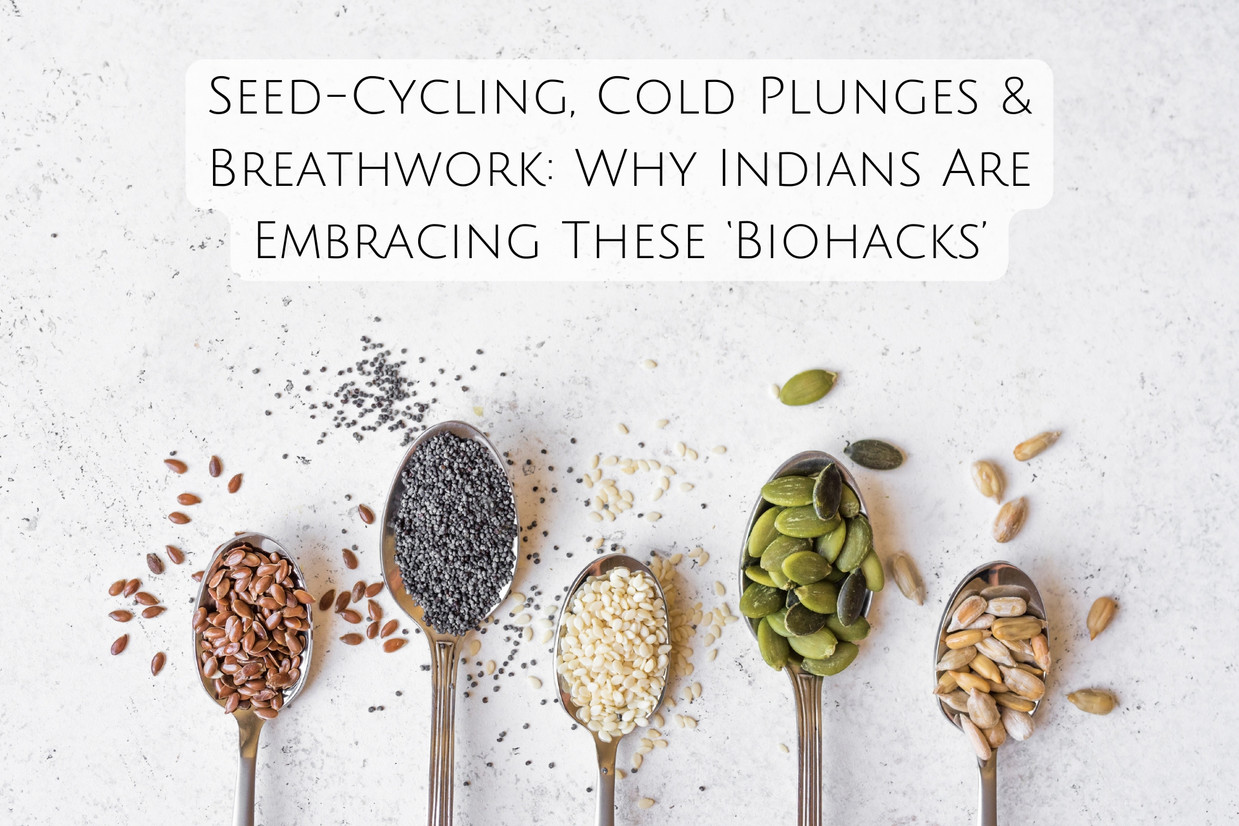
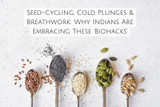
Seed-cycling is a nutritional practice that involves consuming specific seeds during different phases of the menstrual cycle to support hormone balance naturally. It is rooted in the idea that the lignans, fatty acids, and zinc compounds found in particular seeds can either support estrogen production in the first half of the cycle or progesterone production in the second half.
The protocol typically works like this:
- Follicular Phase (Days 1-14): Consume 1 tablespoon each of ground flaxseeds and pumpkin seeds daily.
- Flaxseeds contain lignans that may help modulate estrogen levels.
- Pumpkin seeds are rich in zinc, which supports progesterone production for the next phase.
- Luteal Phase (Days 15-28): Switch to 1 tablespoon each of sunflower seeds and sesame seeds daily.
- Sunflower seeds provide vitamin E and selenium to support progesterone.
- Sesame seeds contain lignans and zinc to aid hormone balance.
Why Indian Women Are Embracing It:
- PCOS Management: With PCOS affecting approximately 1 in 5 Indian women, many are seeking natural alternatives to manage symptoms like irregular periods, acne, and weight gain.
- PMS Relief: Seed-cycling is being adopted as a gentler approach to reduce bloating, mood swings, and menstrual cramps.
- Fertility Support: Couples struggling with conception are incorporating it alongside traditional Ayurvedic fertility treatments.
- Perimenopause Aid: Women in their 40s are using it to manage hot flashes and hormonal fluctuations.
What the science says:
- Flaxseeds are rich in lignans that have phytoestrogenic effects, supporting estrogen metabolism.
- Pumpkin seeds are high in zinc, which plays a role in progesterone production and egg health.
- Sesame seeds contain lignans and selenium that support thyroid function and estrogen clearance.
- Sunflower seeds are rich in Vitamin E and selenium, both important for progesterone support.
Cold Plunges: The Ice Bath Revolution:
Cold water immersion (CWI) — commonly known as cold plunging, cold therapy, or ice bathing — involves submerging the body in cold water, typically between 10–15°C (50–59°F), for a short duration, usually 2–10 minutes. It has been popularised globally by figures like Wim Hof ("The Iceman") and athlete recovery protocols in professional sports.
In India, it has found a dedicated following among fitness enthusiasts, biohackers, mental health advocates, and increasingly, everyday people who have discovered it through social media.
The Science Behind the Chill:
- Norepinephrine surge: Cold exposure causes a significant release of norepinephrine in the brain and body — up to 300% increase. This neurotransmitter improves focus, mood, and attention.
- Dopamine boost: Cold immersion triggers a sustained increase in dopamine levels, producing a powerful sense of wellbeing and motivation that can last hours.
- Inflammation reduction: Cold water constricts blood vessels and reduces inflammation, which is why athletes have used ice baths for recovery for decades.
- Metabolic activation: Cold exposure activates brown adipose tissue (brown fat), which burns calories to generate heat, potentially aiding in metabolic health.
The Indian Context: Why Cold Plunges Are Trending:
- Corporate Burnout Relief: Professionals in high-stress environments like Mumbai and Delhi are using cold therapy for mental clarity.
- Athletic Recovery: Cricketers, runners, and fitness enthusiasts are adopting it for faster muscle recovery.
- Heat Adaptation: Paradoxically, cold exposure helps Indians better tolerate extreme summer heat by improving thermoregulation.
- Ayurvedic Connection: The concept of "Sheetali" (cooling) practices in Ayurveda finds a modern parallel, though traditional texts actually caution against extreme cold.
Breathwork: Conscious Breathing for Modern Life: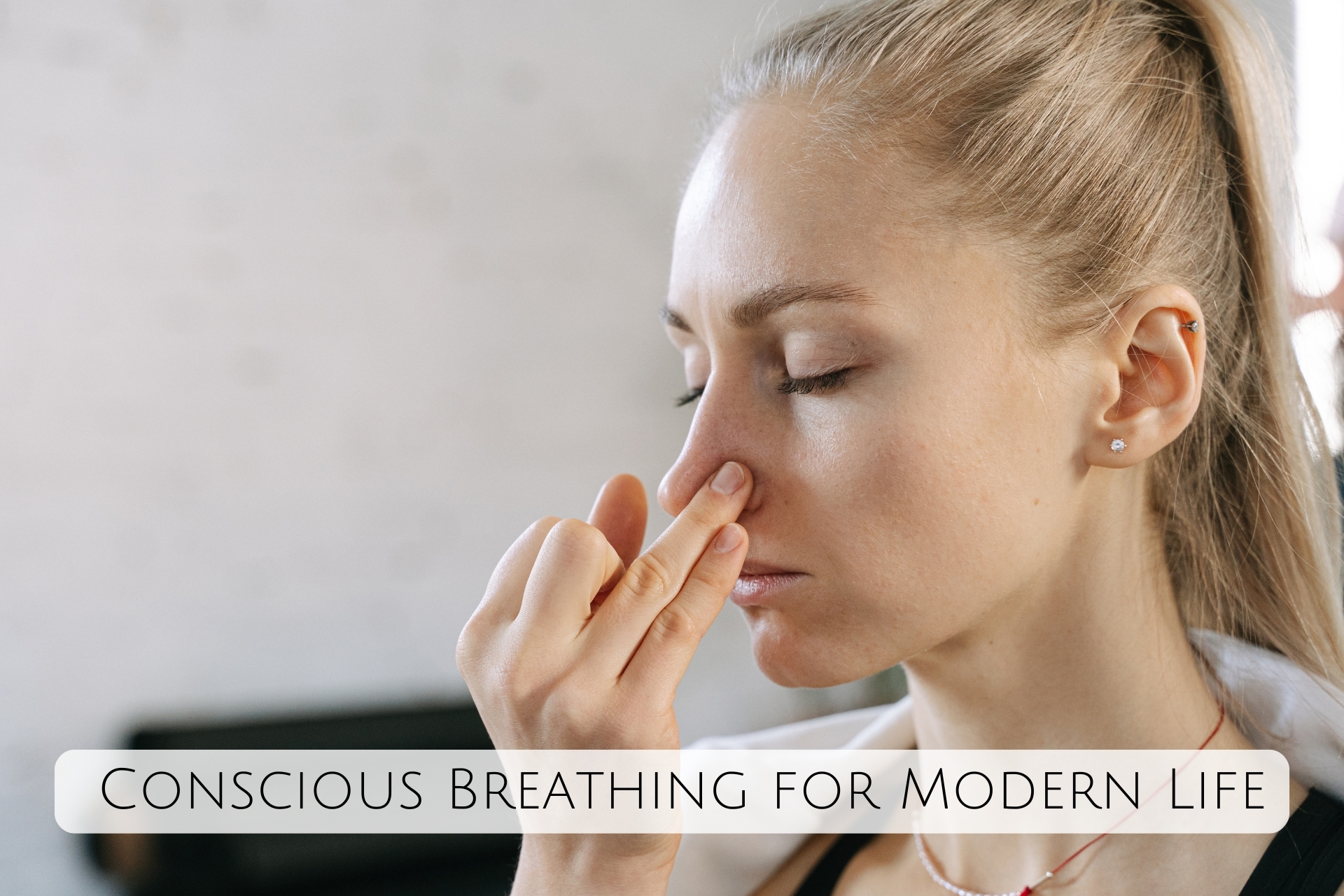
Breathwork refers to a variety of conscious breathing techniques used intentionally to influence physical, mental, and emotional states. It is perhaps the most accessible of all biohacks — requiring no equipment, no money, and no special location. All you need is your breath.
While breathing is involuntary, how we breathe has profound effects on our physiology. Breathwork practices manipulate the rate, depth, and pattern of breathing to activate different parts of the nervous system, shift brain states, and influence hormone levels.
Popular Breathwork Techniques Gaining Ground in India:
- Box Breathing (4-4-4-4): Inhale for 4 counts, hold for 4, exhale for 4, hold for 4. Used by the US Navy SEALs to manage stress in high-pressure situations. Now popular among Indian professionals before presentations, exams, or difficult conversations.
- Wim Hof Method: A powerful technique involving 30 rapid deep breaths followed by a breath hold. Known for alkalising the blood, activating the immune system, and creating a profound sense of energy and clarity.
- 4-7-8 Breathing: Inhale for 4 counts, hold for 7, exhale for 8. Developed by Dr. Andrew Weil as a natural tranquiliser for the nervous system. Widely used in India for sleep and anxiety management.
- Holotropic Breathwork: An intense, extended breathwork practice that can produce altered states of consciousness, used in therapeutic settings for trauma processing.
- Pranayama: The original Indian breathwork system — including techniques like Anulom Vilom, Kapalbhati, Bhramari, and Ujjayi — is finding a new generation of practitioners who are approaching it with both traditional reverence and scientific curiosity.
A Word of Caution: Biohacking Is Not a Replacement for Medicine:
As exciting as these practices are, a responsible conversation about biohacking must include honest caveats:
- Not every biohack works for everybody. Individual variation in genetics, gut microbiome, hormonal profiles, and stress histories means that what transforms one person's health may have minimal effect on another.
- Self-diagnosis is dangerous. Seed cycling should not replace an endocrinologist's evaluation of PCOS. Cold plunges are not a treatment for clinical depression. Breathwork does not replace therapy for trauma.
- Quality of information matters. Social media is full of exaggerated claims, poorly designed studies, and influencers monetising fear. Always cross-reference with qualified professionals.
- Sustainability beats intensity. A five-minute breathwork practice done consistently for six months will outperform a three-day biohacking retreat done once. The evidence consistently favours consistency over extremity.
Are These Biohacks Safe? What You Should Know Before Starting:
While seed-cycling, cold plunges, and breathwork are generally considered safe for healthy individuals, it is important to approach any wellness practice with awareness and, where relevant, professional guidance.
- Seed-Cycling: Safe for most people. Those with seed allergies should avoid specific seeds. Consult a healthcare provider if you are pregnant, nursing, or have a hormone-sensitive condition.
- Cold Plunges: Avoid if you have cardiovascular conditions, Raynaud's disease, or are pregnant. Start gradually. Never cold plunge alone. Do not hold your breath underwater.
- Breathwork: Certain techniques like Wim Hof should not be practiced in water or while driving. People with epilepsy, cardiovascular issues, or a history of fainting should consult a professional. Some techniques can produce dizziness or tingling — this is normal but can be alarming for first-timers.
Conclusion:
India stands at a fascinating crossroads in its relationship with health. On one side lies the extraordinary depth of Ayurveda, yoga, and traditional medicine — systems that understood the body's complexity long before modern science had the vocabulary for it. On the other side lies a generation of increasingly informed, empowered health consumers who have smartphones, access to global research, and a healthy impatience with one-size-fits-all medical advice.
Seed-cycling is helping women reclaim hormonal balance. Cold plunges are helping professionals reclaim mental clarity and physical resilience. Breathwork is helping an entire generation reclaim calm, focus, and the simple, miraculous power of the breath.
These are not fads. They are a movement. And as science continues to validate what practice has long known, India — with its unique blend of ancient health wisdom and modern intellectual hunger — is uniquely positioned to lead it.
Whether you are a curious beginner or a seasoned health enthusiast, there has never been a better time to explore these biohacks. Start small. Be consistent. Trust the process. And as with everything in wellness, listen to your body above all else.
Recent Posts
-
Seed-Cycling, Cold Plunges & Breathwork: Why Indians Are Embracing These ‘Biohacks’
Introduction: India has always had a rich tradition of holistic wellness — from Ayurveda and pranay
-

Sustainable Beauty: How to Build an Eco-Friendly Vanity in India
Introduction: In a world increasingly driven by the urgent need for sustainability, even our beauty
-

The Art of Adaptogen Stacking: Combining Ancient Herbs for Modern Performance
Introduction: In today’s fast-paced world, stress, fatigue, decreased focus, and burnout have become
