
Water Memory: The Quantum Perspective on Why Water is More Than H₂O

Water is everywhere—covering over 70% of the Earth’s surface, coursing through our bodies, and essential to every form of life. Yet, this seemingly simple molecule, composed of just two hydrogen atoms and one oxygen atom, holds profound mysteries that challenge our understanding of science and nature. Among these enigmas is the provocative idea of water memory: the hypothesis that water can retain information about substances it once encountered, even when those substances are no longer present.
Water memory stands at the crossroads of traditional science, cutting-edge quantum mechanics, and holistic medicine. Could this phenomenon revolutionize our view of chemistry, biology, and consciousness? Let’s dive into this fascinating concept and explore how quantum mechanics might hold the key to unlocking water’s hidden potential.
What Is Water Memory?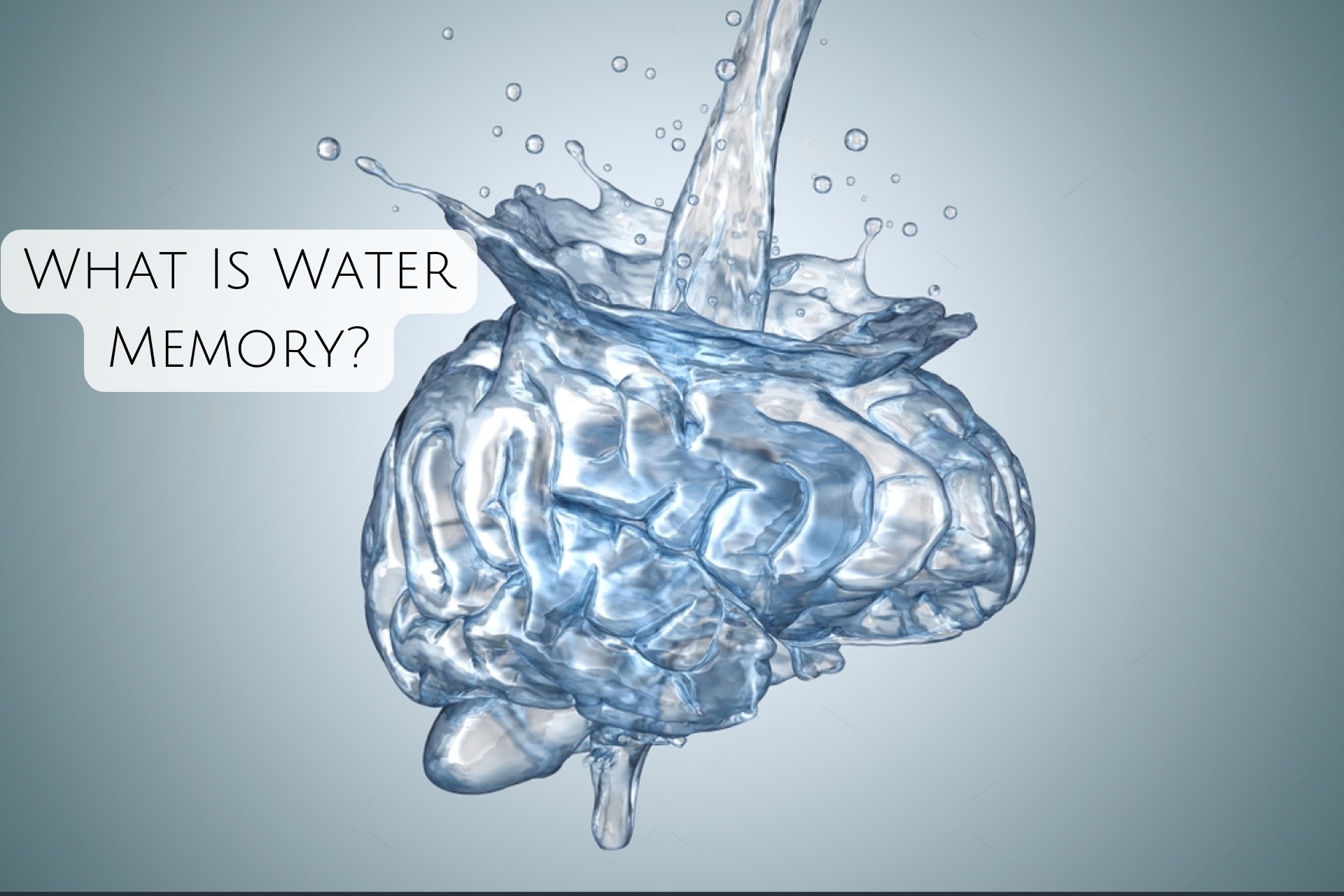
The concept of water memory gained attention in 1988, when French immunologist Jacques Benveniste published a controversial study in the prestigious journal Nature. His research suggested that water, after being exposed to an allergen and then diluted repeatedly until no molecules of the allergen remained, still produced biological effects. This implied that water retained some form of "memory" of the allergen.
However, the idea of water memory has persisted, capturing the imagination of scientists, mystics, and alternative medicine practitioners. If true, water memory could challenge the very foundations of chemistry and physics, suggesting that water is not merely a passive solvent but an active, information-carrying medium.
The Quantum Connection: Why Water Might Remember:
Traditional chemistry cannot easily explain water memory. However, quantum mechanics offers tantalizing possibilities that might shed light on this mystery. Let’s explore how water’s quantum properties could enable it to store information.
1. Hydrogen Bond Networks: Molecular Clustering and Stability:
Water molecules are unique in their ability to form dynamic, three-dimensional networks through hydrogen bonds. These bonds create clusters that are constantly forming, breaking, and reforming. Some researchers speculate that these clusters could act as "information carriers," preserving the spatial arrangement of molecules or ions that were once dissolved in the water.
Theoretically, the structure of these clusters could encode and store information, much like a computer hard drive. Even after the original substance is gone, the molecular arrangement within the water might persist, functioning as a kind of "structural memory."
2. Quantum Coherence in Water:
Quantum coherence occurs when particles, such as molecules or atoms, exist in a synchronized quantum state. In this state, they act as a unified system rather than as individual components. Water’s hydrogen-bond network, with its constant motion and reorganization, might exhibit quantum coherence on a macroscopic scale.
If this coherence exists, it could allow water to maintain subtle energetic patterns or electromagnetic signals associated with substances it previously encountered. This idea aligns with theories suggesting that water can act as a "quantum tape recorder," storing information in its molecular vibrations.
3. Electromagnetic Field Interactions:
Another compelling possibility lies in water’s interaction with electromagnetic fields. Research suggests that water molecules are highly sensitive to electromagnetic forces, which can influence their orientation and bonding patterns. These electromagnetic imprints could linger in the water, even after the source is removed.
Luc Montagnier, a Nobel Prize-winning virologist, proposed that water can store and transmit electromagnetic signals from DNA molecules, even when the DNA itself is no longer present. His experiments, though controversial, hint at water’s ability to act as an intermediary between the physical and energetic realms.
4. Quantum Entanglement and Nonlocal Effects:
Quantum entanglement, often described as "spooky action at a distance," occurs when two particles become interconnected, such that the state of one instantly influences the other, regardless of distance. Some researchers speculate that water might exhibit entanglement-like properties, allowing it to store and transmit information nonlocally.
If true, this could explain how water memory operates on an energetic level, transcending traditional molecular interactions.
Scientific Evidence and Controversy:
The concept of water memory has sparked fierce debate within the scientific community. While some studies suggest that water can retain information, others criticize the idea as unscientific or irreproducible. Let’s examine both sides.
Evidence Supporting Water Memory:
- Jacques Benveniste’s Experiments (1988): Benveniste’s team reported that extremely diluted solutions could elicit biological effects, implying that water retained a "memory" of the original substance.
- Luc Montagnier’s DNA Studies: Montagnier claimed that water could store and transmit electromagnetic signals from DNA, supporting the idea that water holds information beyond its chemical composition.
- Homeopathy Research: Water memory is often cited as a potential explanation for homeopathy, a medical system that uses highly diluted substances. While controversial, some studies suggest measurable biological effects from these dilutions.
Beyond the Debate: The Bigger Picture of Water’s Mysteries
Even if water memory remains unproven, water’s extraordinary properties continue to astonish researchers:
- Biological Interactions: Water is not just a solvent but an active participant in cellular processes, forming hydration shells around biomolecules and influencing their behavior.
- Quantum Biology: Emerging research in quantum biology suggests that water plays a role in phenomena like photosynthesis, enzyme activity, and neural signaling.
- Energy Fields and Consciousness: Some theories propose that water interacts with subtle energy fields, serving as a medium for transmitting information or even consciousness.
Implications for the Future:
If water memory is validated, it could revolutionize numerous fields:
- Medicine: It could explain the mechanisms behind homeopathy and inspire new approaches to drug delivery and healing.
- Quantum Computing: Water’s potential to store information at the quantum level could pave the way for novel computational technologies.
- Environmental Science: Understanding water’s ability to retain information could transform how we approach water purification and pollution control.
- Philosophy and Spirituality: Water memory could bridge science and spirituality, suggesting that water is not just a physical substance but a carrier of life’s essence.
Conclusion: Water, the Quantum Mystery:
Water is far more than H₂O—it is a profound enigma that defies simple explanation. Whether or not water memory proves to be a quantum reality, the questions it raises challenge us to rethink our understanding of nature and reality. As scientists continue to explore this mysterious substance, one thing is clear: water holds secrets that could reshape our world.
Recent Posts
-

Microbiome Beauty: Why Your Skin Needs Probiotics and Prebiotics Too
Introduction: The microbiome of the skin plays a crucial role in maintaining its health and appearan
-

Modern Beauty Minimalism: How Ghost Lashes and Bare-Glam Are Changing Beauty Standards
Introduction: Beauty trends have always been cyclical, but the latest sensation sweeping through Ind
-

The Fungus Inside Us: How the Mycobiome is Linked to Cancer
When we think about the organisms within us, the first thought is often bacteria—the gut microbiome