
The Art of Adaptogen Stacking: Combining Ancient Herbs for Modern Performance
Introduction:
In today’s fast-paced world, stress, fatigue, decreased focus, and burnout have become common obstacles to productivity and well-being. While lifestyle habits like exercise and nutrition are critical, many people are searching for natural ways to support resilience and cognitive performance. Enter adaptogens—herbal substances known for helping the body adapt to physical, emotional, and environmental stress.
Adaptogen stacking is the intentional combination of different adaptogenic herbs to create synergistic effects that go beyond what each herb can do alone. Among the most researched and widely embraced adaptogens today are Ashwagandha, Tulsi (Holy Basil), and Lion’s Mane mushroom. Each offers unique benefits in stress support, immune function, and brain health, and when combined thoughtfully, they can elevate overall performance and mental clarity.
In this comprehensive guide, we explore what adaptogens are, why people are stacking them, the benefits of Ashwagandha, Tulsi, and Lion’s Mane, and how to stack them safely and effectively for peak performance.
Understanding Adaptogens — The Foundation of Stacking:
Adaptogens are a specialized category of botanical compounds that help the body maintain homeostasis—internal balance—when facing external stressors. The term "adaptogen" describes plants that enhance the body's capacity to adapt to challenges, whether physical, mental, or emotional.
The defining characteristics of true adaptogens are:
- Non-Specific Action: They support multiple body systems simultaneously rather than targeting a single pathway. They don't force the body in a particular direction but help it return to optimal balance.
- Homeostatic Regulation: They work bidirectionally—if cortisol is too high, they help lower it; if it's too low, they help raise it. This distinguishes them from stimulants (which only increase) or sedatives (which only decrease).
- Safety Profile: True adaptogens are safe for long-term use without tolerance development, dependency, or significant side effects at recommended dosages.
- Non-Toxic: They contain no poisonous compounds and don't harm organs or systems with extended use.
- Evidence-Based: Their effects are supported by peer-reviewed research and traditional use spanning decades or centuries.
The Three Adaptogens Revolutionizing Performance:
Before exploring stacking synergies, understanding each adaptogen's individual mechanisms and benefits provides the foundation for understanding their combined effects.
-
ASHWAGANDHA (Withania somnifera): The Stress Master and Recovery Amplifier:

Ashwagandha, a cornerstone of Ayurvedic medicine for over 3,000 years, represents perhaps the most researched adaptogen. Modern clinical research has validated traditional use while revealing sophisticated mechanisms underlying its remarkable effects.
Primary Bioactive Compounds:
-
Withanolides:
- Steroid-like compounds unique to Ashwagandha.
- Primary active constituents responsible for adaptogenic effects.
- Concentration varies dramatically between plant sources and extraction methods.
-
Alkaloids:
- Support neurological function.
- Contribute to anxiolytic (anxiety-reducing) effects.
-
Saponins:
- Support immune modulation.
- Enhance bioavailability of other compounds.
Physiological Effects and Benefits:
|
Benefit |
Mechanism |
Research Support |
|
Cortisol Reduction |
Withanolides directly suppress cortisol synthesis |
Multiple RCTs showing 25-30% cortisol reduction |
|
Anxiety Relief |
GABA pathway modulation; promotes calm without sedation |
FDA consideration for anxiety indication |
|
Sleep Improvement |
Promotes deep sleep; reduces sleep latency |
72% improvement in sleep quality in studies |
|
Muscle Strength |
Supports testosterone optimization; enhances protein synthesis |
Athletic performance improvements documented |
|
Cognitive Function |
Protects neural tissue; supports neurotransmitter production |
Memory and processing speed improvements noted |
|
Immune Support |
Increases natural killer cell activity; promotes IgA antibodies |
Enhanced immune response to pathogens |
|
Cardiovascular Health |
Reduces inflammation; supports healthy cholesterol |
Beneficial effects on arterial function observed |
-
TULSI (Ocimum sanctum): THE CLARITY CATALYST
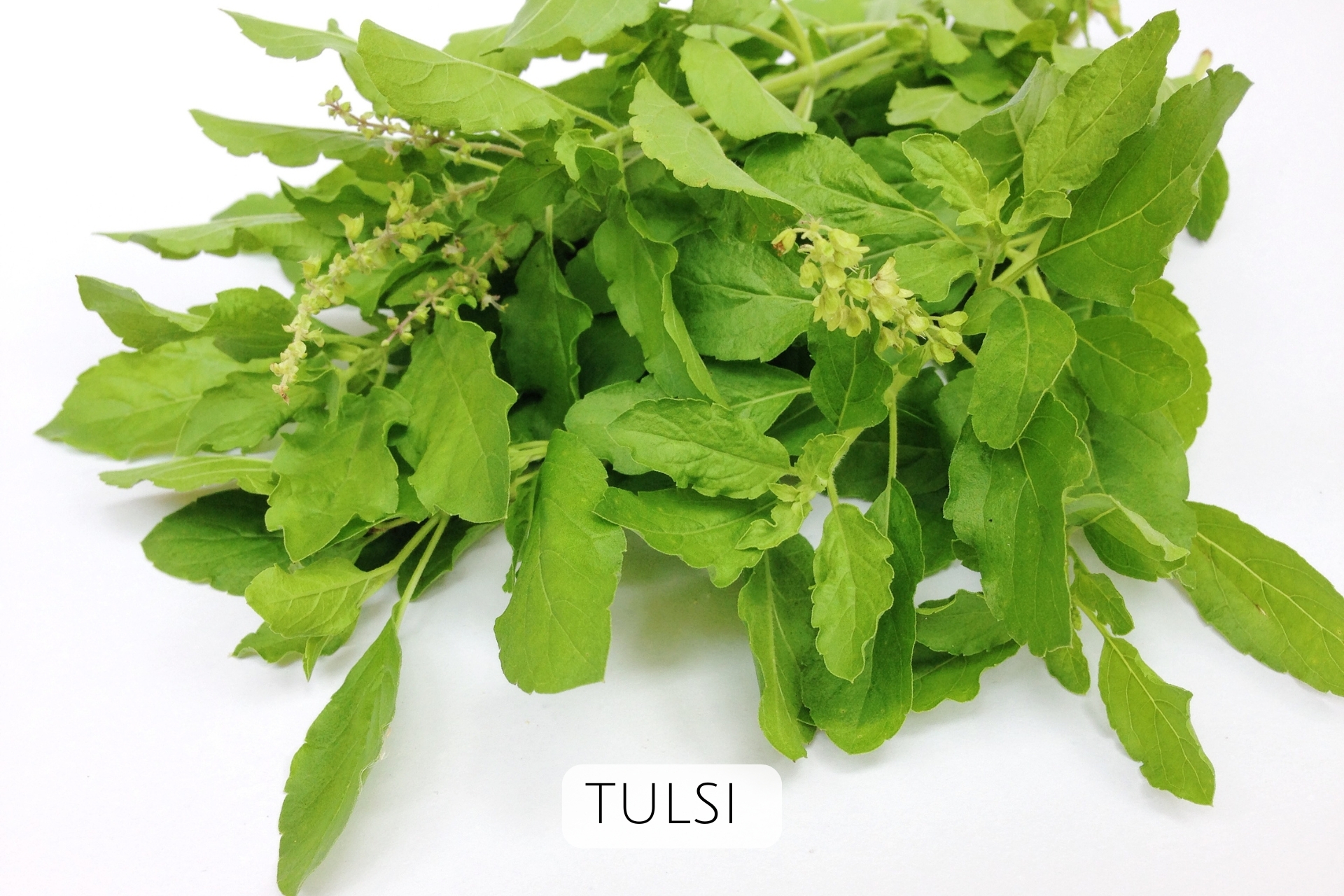
Tulsi, also called Holy Basil, is revered in Ayurvedic medicine as a sacred plant promoting spiritual awareness and mental clarity. Unlike ashwagandha's deep stress regulation, tulsi excels at promoting calm focus—the ability to remain mentally sharp while physiologically relaxed.
Primary Bioactive Compounds:
-
Essential Oils:
- Eugenol, caryophyllene, linalool, camphor.
- Volatile aromatic compounds.
- Contribute to anti-inflammatory and antioxidant effects.
- Responsible for Tulsi's distinctive aromatic profile.
-
Polyphenols:
- Powerful antioxidants.
- Reduce oxidative stress throughout the body.
- Support mitochondrial function.
- Protect against age-related degeneration.
-
Terpenes:
- Aromatic molecules with multiple health effects.
- Cross blood-brain barrier.
- Support neurological function.
- Contribute to stress adaptation.
Physiological Effects and Benefits:
|
Benefit |
Mechanism |
Research Support |
|
Cognitive Clarity |
Enhances acetylcholine production; supports prefrontal cortex function |
Improved attention and mental focus observed |
|
Calm Focus |
Reduces scattered thinking; promotes alpha brain waves |
EEG studies show optimal brain wave patterns |
|
Memory Enhancement |
Supports dendritic connections; reduces mental fog |
Enhanced working memory and recall documented |
|
Mood Elevation |
Promotes dopamine; elevates mood without stimulation |
Mood improvements without restlessness noted |
|
Emotional Stability |
Balances neurotransmitters; reduces emotional reactivity |
Decreased irritability and emotional volatility observed |
-
LION'S MANE: The Neurogenesis Catalyst and Cognitive Amplifier
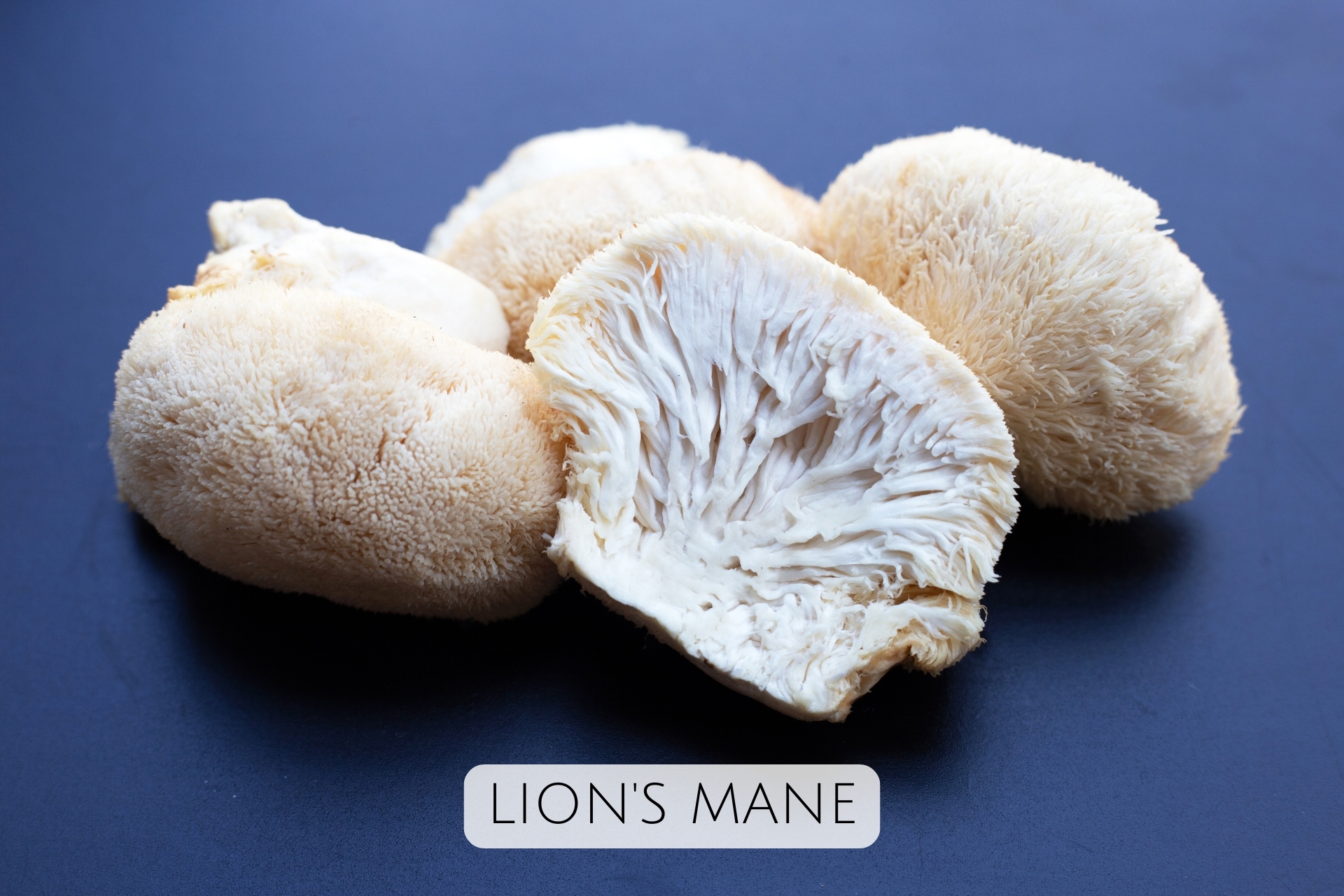
Lion's Mane represents a revolutionary addition to adaptogenic stacks—a medicinal mushroom that directly supports neuroplasticity, cognitive function, and potentially brain health and longevity.
Unlike Ashwagandha (primarily stress-modulating) and Tulsi (stress-modulating with immune enhancement), Lion's Mane directly enhances neurological function. This makes it a unique complement to traditional adaptogens.
Primary Bioactive Compounds:
-
Beta-Glucans:
- Polysaccharides unique to mushrooms.
- Immune-modulating compounds.
- Enhance pattern recognition by the immune system.
- Support systemic immunity.
-
Erinacines:
- Bioactive compounds found in the fruiting body.
- Enhance NGF and BDNF (brain-derived neurotrophic factor).
- Support myelination (nervous system insulation).
- Promote neurogenesis (new neuron formation).
-
Ergothioneine:
- Unique antioxidant amino acid (produced by mushrooms, rare in other foods).
- Crosses the blood-brain barrier.
- Protects neurological tissue.
- Reduces age-related cognitive decline risk.
Physiological Effects and Benefits:
|
Benefit |
Mechanism |
Research Support |
|
Nerve Growth Factor (NGF) Stimulation |
Erinacines directly increase NGF synthesis |
Strongest mechanism of any cognitive supplement |
|
Neurogenesis |
Promotes new neuron birth in hippocampus |
Enhanced memory and cognitive capacity |
|
Mental Clarity |
Reduced brain fog; improved cognitive processing |
Enhanced mental sharpness and processing speed |
|
Memory Enhancement |
Supports memory consolidation and retrieval |
Improved both short and long-term memory |
|
Mood & Motivation |
Supports dopamine pathways; lifts mood |
Reduced depression and increased motivation |
|
Learning Capacity |
Neuroplasticity enhancement facilitates learning |
Faster skill acquisition and knowledge retention |
The Future of Adaptogen Stacking:
Adaptogen stacking is evolving rapidly. Future directions include emerging science, technological integration, and increasingly personalized approaches.
-
Polygala (Polygala tenuifolia):
- Traditional use for memory and cognition.
- Research supports anxiolytic and cognitive effects.
- Could enhance Lion's Mane in cognitive stacks.
- Status: Growing research support; increasing commercial availability.
-
Saffron (Crocus sativus):
- Strong evidence for mood enhancement (possibly equivalent to antidepressants)
- Anti-inflammatory and antioxidant effects.
- Particularly for mood-optimized stacks.
- Status: Strong evidence; expensive; niche use.
-
Genetic Variation Assessment:
- Cytochrome P450 variations affecting adaptogen metabolism.
- Genetic predispositions to stress responsiveness.
- COMT variants affecting neurotransmitter processing.
- Individual genetic profiles determining optimal adaptogen selection.
-
Microbiome-Based Personalization:
- Microbiome composition affecting adaptogen absorption.
- Bacteria-adaptogen interactions produce personalized effects.
- Microbiome-based prediction of adaptogenic response.
- Personalized prebiotic + adaptogenic stacks.
-
Metabolic Profiling:
- Blood chemistry indicates stress system status.
- Cortisol curves revealing HPA axis state.
- Inflammatory markers indicating optimal anti-inflammatory emphasis.
- Neurotransmitter assessments guiding neurological support.
Conclusion:
The Ashwagandha-Tulsi-Lion's Mane stack represents the convergence of ancient wisdom and modern science—a sophisticated approach to human optimization that respects biological complexity rather than forcing simplistic solutions. In an era of escalating demands and chronic stress, this adaptogen trio offers a sustainable path to peak performance: one that enhances resilience, protects health, and supports long-term thriving rather than short-term burnout.
What makes this stack revolutionary is not just the individual potency of each herb, but their intelligent synergy. Ashwagandha builds the foundation of stress resilience. Tulsi provides the adaptive flexibility to navigate changing demands. Lion's Mane constructs cognitive architecture for creative problem-solving and learning. Together, they create a whole greater than the sum of its parts—a comprehensive system for mind-body optimization that evolves with your needs.
The future of performance isn't about pushing harder—it's about adapting smarter. Embrace the adaptogen revolution and discover what becomes possible when your body and mind are truly supported.
Recent Posts
-

Sustainable Beauty: How to Build an Eco-Friendly Vanity in India
Introduction: In a world increasingly driven by the urgent need for sustainability, even our beauty
-
The Art of Adaptogen Stacking: Combining Ancient Herbs for Modern Performance
Introduction: In today’s fast-paced world, stress, fatigue, decreased focus, and burnout have become
-

The C-Beauty Revolution: How Chinese Skincare & Douyin Makeup Are Taking Over the World
Introduction: Welcome to the revolution sweeping the global beauty landscape—the rise of C-Beauty, a
